


Why Experience Is the Real Luxury

Luxury has been sold to us as “more.” More finishes, more features, more square footage, more things to manage. But after more than 20 years of building homes, I can tell you this: the real luxury isn’t what you see—it’s how a home actually lives. A truly luxurious home feels effortless. You don’t have to think about it. You don’t have to work around it. It doesn’t require explanations or constant adjustments. It just works.
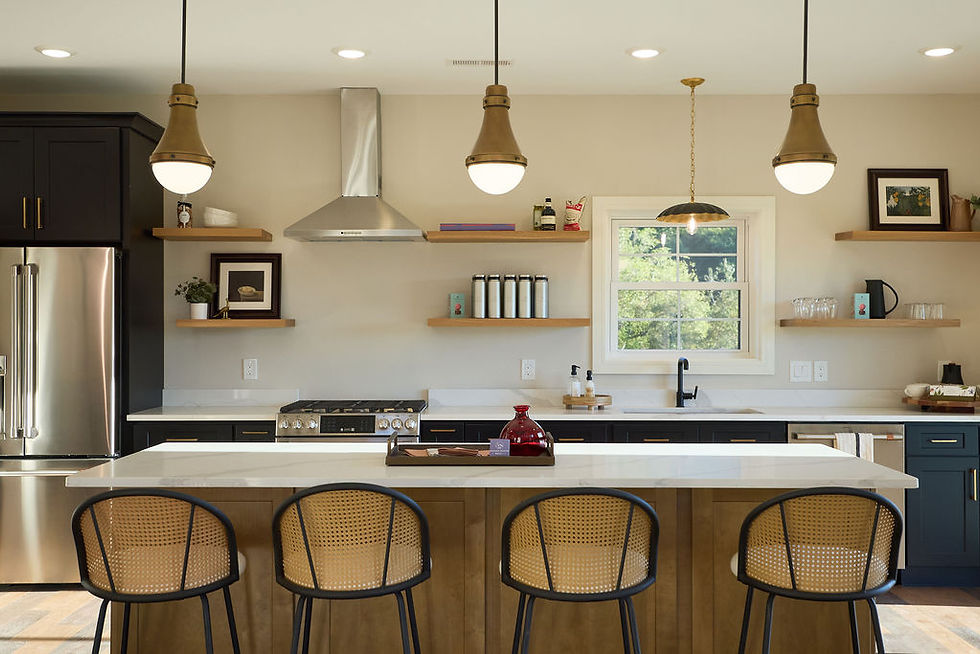
The best homes I’ve built aren’t the ones that try to impress you the second you walk through the door. They’re the ones that quietly make sense once you’re inside. The layout flows, cabinetry is intentionally designed to carry through the entire home—not copied room to room, but thoughtfully related—so nothing feels disjointed or accidental. Kitchens, bathrooms, mudrooms, and built-ins all speak the same language, even if they’re saying it a little differently.
Experience shows up in the details most people don’t notice until they’re missing. Tile selections that actually complement the lighting in a space—not fight it. Materials that look just as good in natural daylight as they do at night, without turning gray, yellow, or muddy depending on the hour. A comprehensive color palette that accounts for the fact that in a mountain home, the outdoors is part of the interior. Wall and trim colors should be finalized once the home is built, not pulled from a fan deck months before your land is even chosen, so they marry the natural light, the views, and the surrounding landscape. The forest, the sky, the stone outside—they’re just as much part of the palette as the walls themselves, especially in the Smokies!
Then there are the details people feel but never consciously notice. Trim proportions, for example. Rooms with ceilings over eight feet require larger trim to feel balanced, but it has to be done in a way that complements the rest of the home without calling attention to itself. I typically use 7” baseboards on first floors with 9’+ ceilings, then transition upstairs to 5” baseboards where ceilings drop to 8”. No one walks in and points it out—but everyone feels that it’s right. That’s not decorative. That’s experience.
This matters even more in the mountains. A luxury mountain home has to work harder than a city home. Weather changes. Mud shows up. Boots, dogs, firewood, and extra guests arrive unannounced. A home that’s too precious becomes exhausting very quickly. A home designed for ease becomes the one people want to live in—and then quietly never want to leave.
The homes I’m most proud of aren’t the ones that get the most photos. They’re the ones where owners say, “This just feels good,” and then stop talking about the house altogether. That’s not luck. That’s experience—earned over decades, refined on real job sites, and built into decisions long before the finishes go in. Because in the end, the highest form of luxury isn’t what your house shows off. It’s how little it asks of you once you’re living in it.


Comments